Hello all organic and artificial life forms,
Lately, I’m trying to improve my learning effectiveness. There is so much incredible things to learn, to discover. If I don’t improve my learning efficiency, I will gone without understanding anything about this incredible universe. So I searched sources to learn how to learn. I found a course in Coursera called Learning How to Learn: Powerful mental tools to help you master tough subjects. It’s a four week course. Each week we encounter new concepts about learning. If you prefer reading, you can check out: A Mind for Numbers: How to Excel at Math and Science (Even If You Flunked Algebra). It’s nearly about same things but book is more detailed.
Another source that I consume: Aklında Kalsın Başarılı Öğrenme Bilimi. I recommend the first book or course cause this book contains so much repetition. I’m bored a little bit when I reading.
I want to share couple of things from these sources:
- Our brains uses two different processes for thinking. The focused and diffuse modes. We need switch modes to understand new concepts or solve a problem. In the book, the author uses the pinball machine metaphor to better explain it. I liked this explanation, so I share this part from the first book.
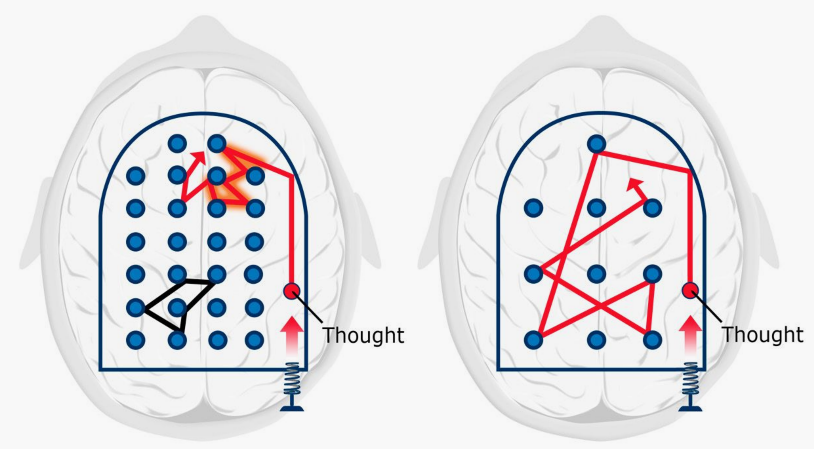
As an example of this, note the upper “thought” that your pinball first bounces around in on the left-hand image. It is very far away and completely unconnected from the lower pattern of thought in the same brain. You can see how part of the upper thought seems to have an underlying broad path. This is because you’ve thought something similar to that thought before. The lower thought is a new thought—it doesn’t have that underlying broad pattern.
The diffuse approach on the right often involves a big-picture perspective. This thinking mode is useful when you are learning something new. As you can see, the diffuse mode doesn’t allow you to focus tightly and intently to solve a specific problem—but it can allow you to get closer to where that solution lies because you’re able to travel much farther before running into another bumper.
- The author suggest some rules for good studying. This list like a little summary of the book.
- In medicine we must remember so many things. So spaced repetition and recall are so important for remembering. These techniques help move items from working memory to long-term memory.
- Nowadays, I’m trying to use flashcard technique. I use Anki for create flashcards. Actually it’s so much fun. If we gamify this technique, it will be more fun and educative. Again I have got brilliant(!) ideas.

- When we are talking about brilliant(!) ideas, I’m watching Business Entrepreneurship from Crash Course in my free times. It’s short, educative and fun. You can check it out too.
- We live in a technological age. We impact from codes we wrote. Our culture is shaping from technology and the code behind it. For example the like button. It totally changed the social media usage and our social interactions. This article –The Lines of Code That Changed Everything – is a nice collection of the codes that impacted us. A rich and complicated subject in terms of thinking and research.
- A wonderful blog post about Effectively Using Matplotlib. Blog is wonderful too. It contains very quality posts.
- An amazing news: Radiohead Public Library. The library contains all the band’s officially released music, live footage, artwork, curated playlists, fan club newsletters and lots of more.
That’s all for now. By the way, I applied YGA again. I hope I can be a YGA volunteer this time. Wish me luck! And live long and prosper.



 Betül's Paracosm
Dr. William Bell için bir cevap yazın Cevabı iptal et